For equestrians who want to enjoy riding, training, and exercising their horses year‑round — regardless of the weather — a fully enclosed indoor riding arena can be a great option.
Following are key considerations when planning the facility to help ensure a safe, highly functional, and aesthetically pleasing riding arena.
Site Selection and Development
Site selection and preparation are among the most important considerations when building an indoor arena. Drainage should be addressed before, not after, the arena is constructed. The building site for your riding arena should be well‑drained, accessible, and have a minimum 5% slope away from the building in all directions to help ensure good surface drainage.
The site should also accommodate future building and paddock expansion, as well as good traffic patterns for the safe and convenient handling of animals, vehicle access, equipment, and materials.
Most importantly, select a reputable building company with strong engineering and equine facility experience that will use high‑quality materials for your project. It is also highly beneficial to enlist the assistance of a qualified building consultant to aid in the evaluation of the building site.
Size and Layout
Another important decision in planning your new riding arena involves the building layout.
- Training or exercise arenas can be as small as 72 feet wide, while full‑sized performance arenas tend to be 100 to 150 feet wide.
- For length, plan for a minimum of twice the building width. It is recommended to use survey flags to measure out and mark your desired arena size, then ride in that area a few times to get a feel for what dimensions you need.
- The facility should have a minimum height of 16 feet for horse and rider, which is sufficient for most training activities and pleasure riding. When extensive training in jumping is required, the arena should ideally be 19 or 20 feet tall to allow for clearance of the horse and rider with ceiling fans and lights.
Ventilation and Insulation
Another essential aspect of your arena design is ensuring proper ventilation and insulation. This will help manage heat buildup during summer, minimize condensation in cooler seasons, and address the high humidity levels generated by horses.
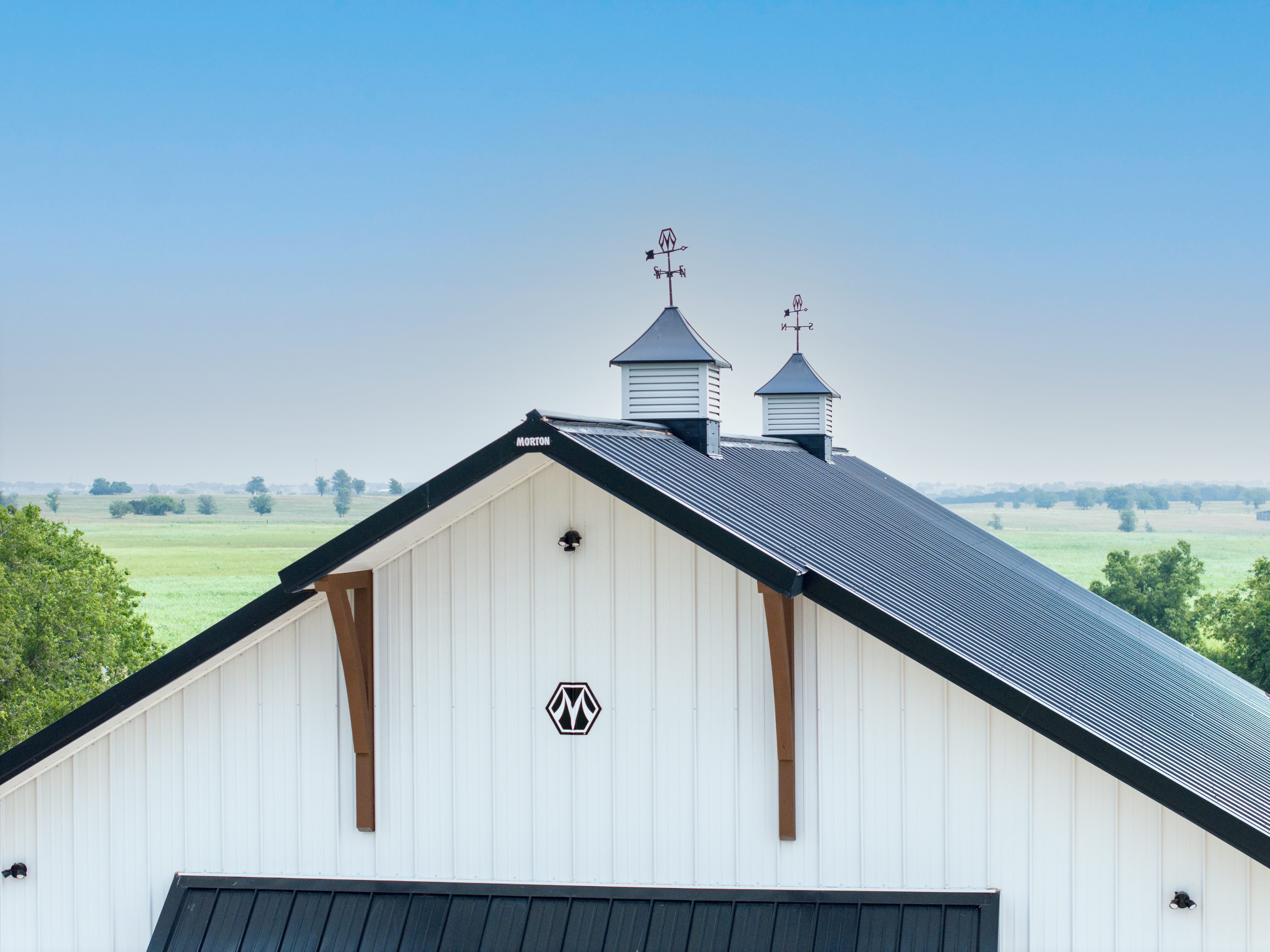
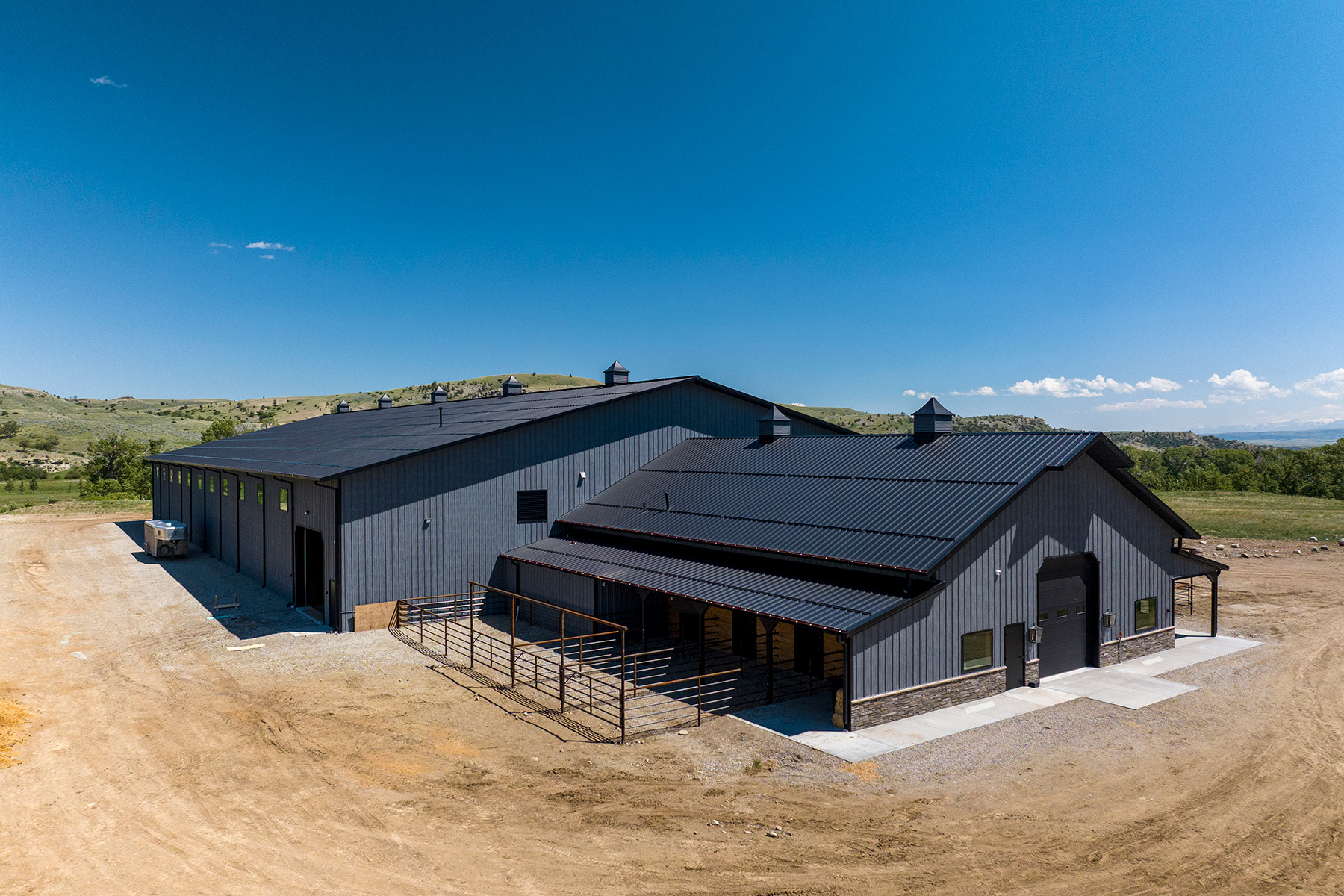
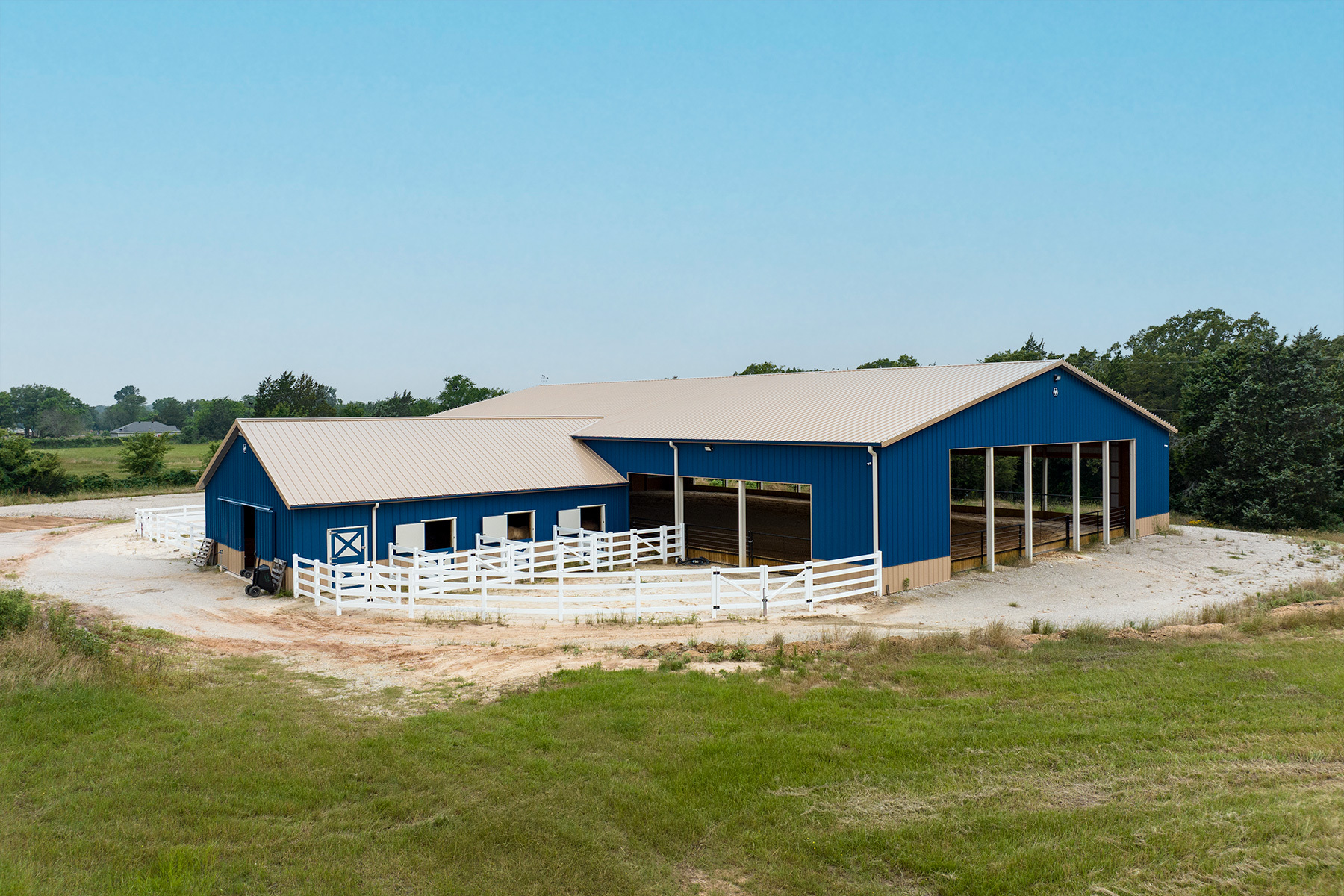
Fully enclosed riding arenas offer more protection from the elements, while open‑walled arenas allow for maximum ventilation. To further control condensation, the arena should have vented overhangs, powered or non‑powered cupolas, and a large end wall or sidewall sliding doors, which also aid in summer ventilation.
Lighting
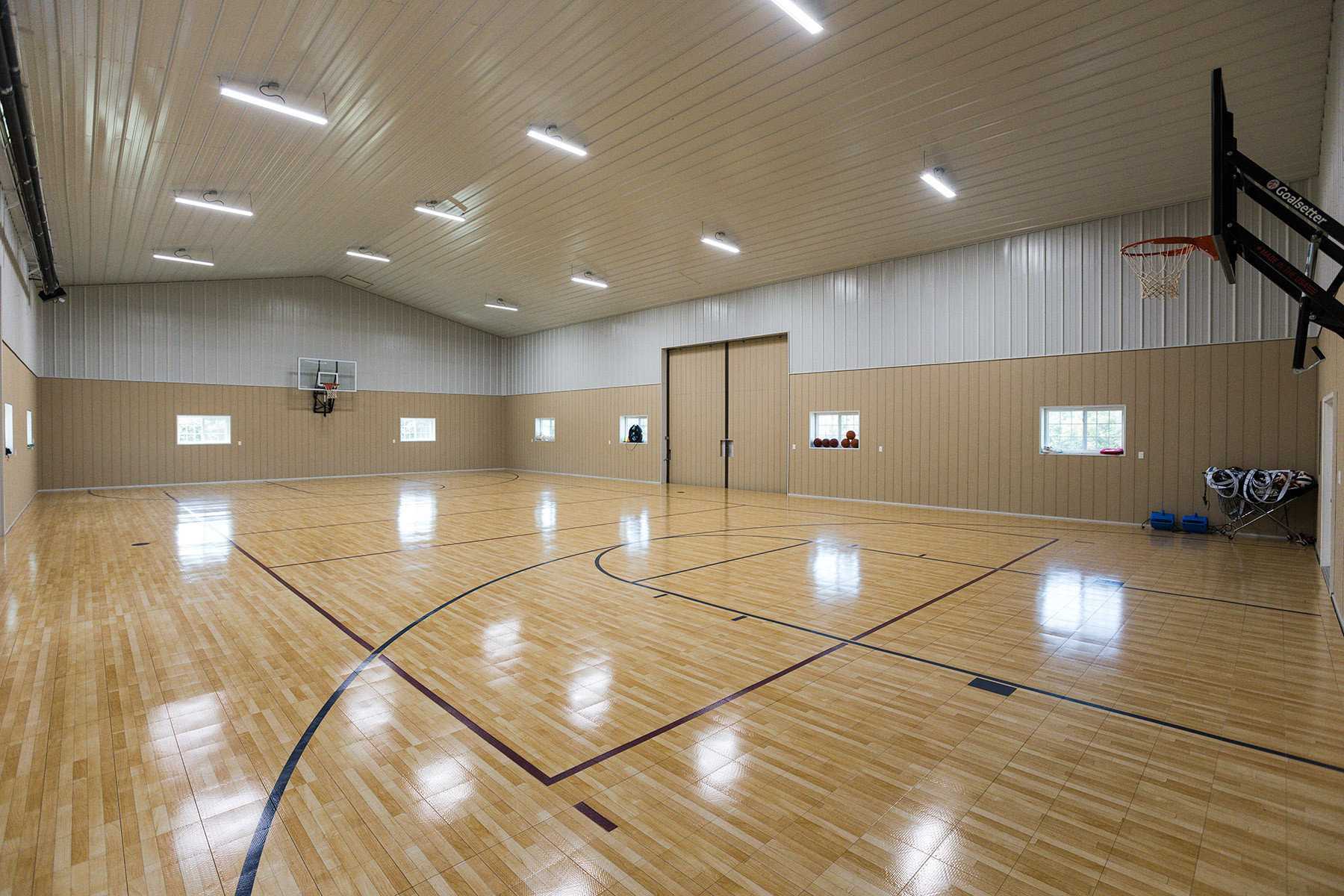
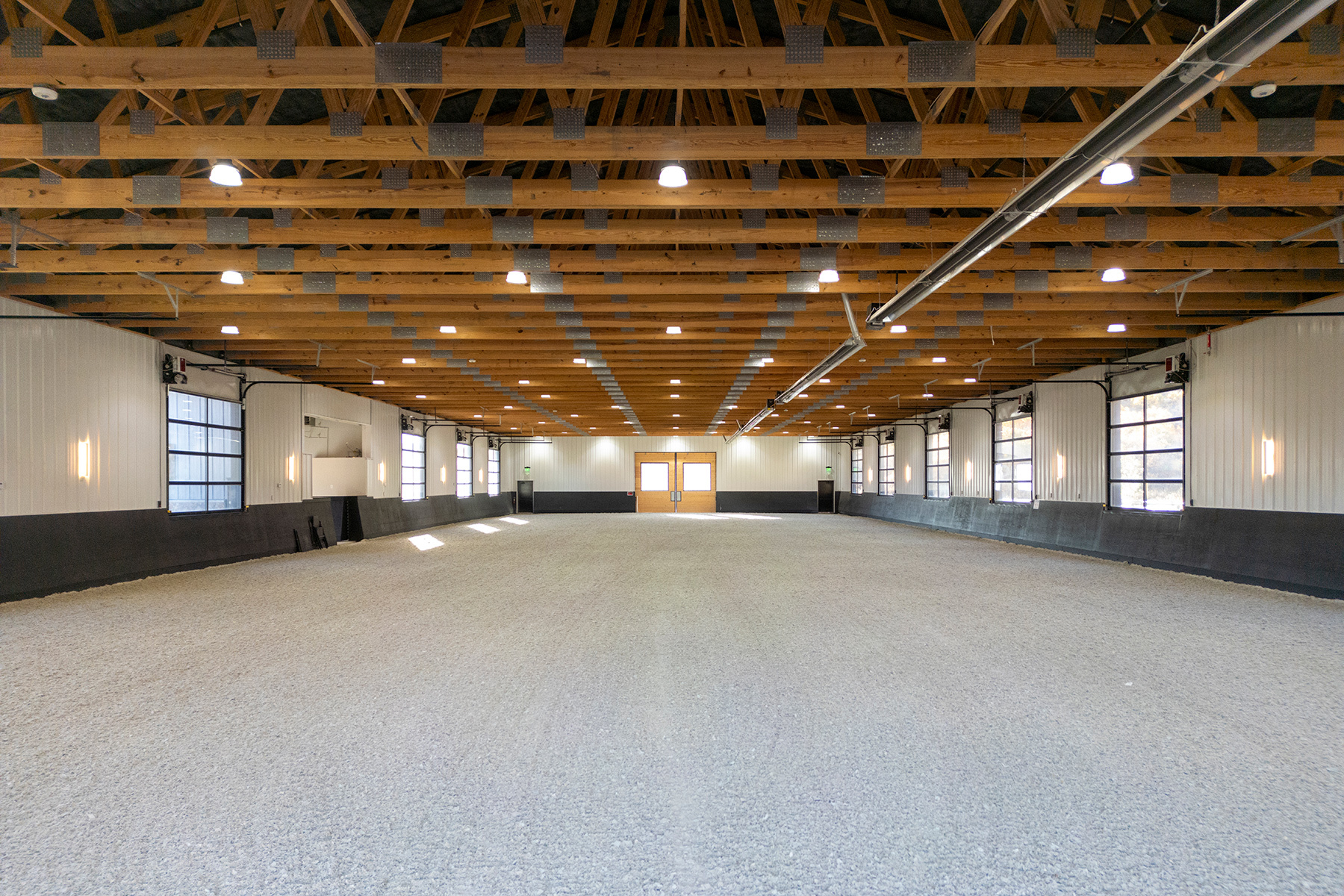
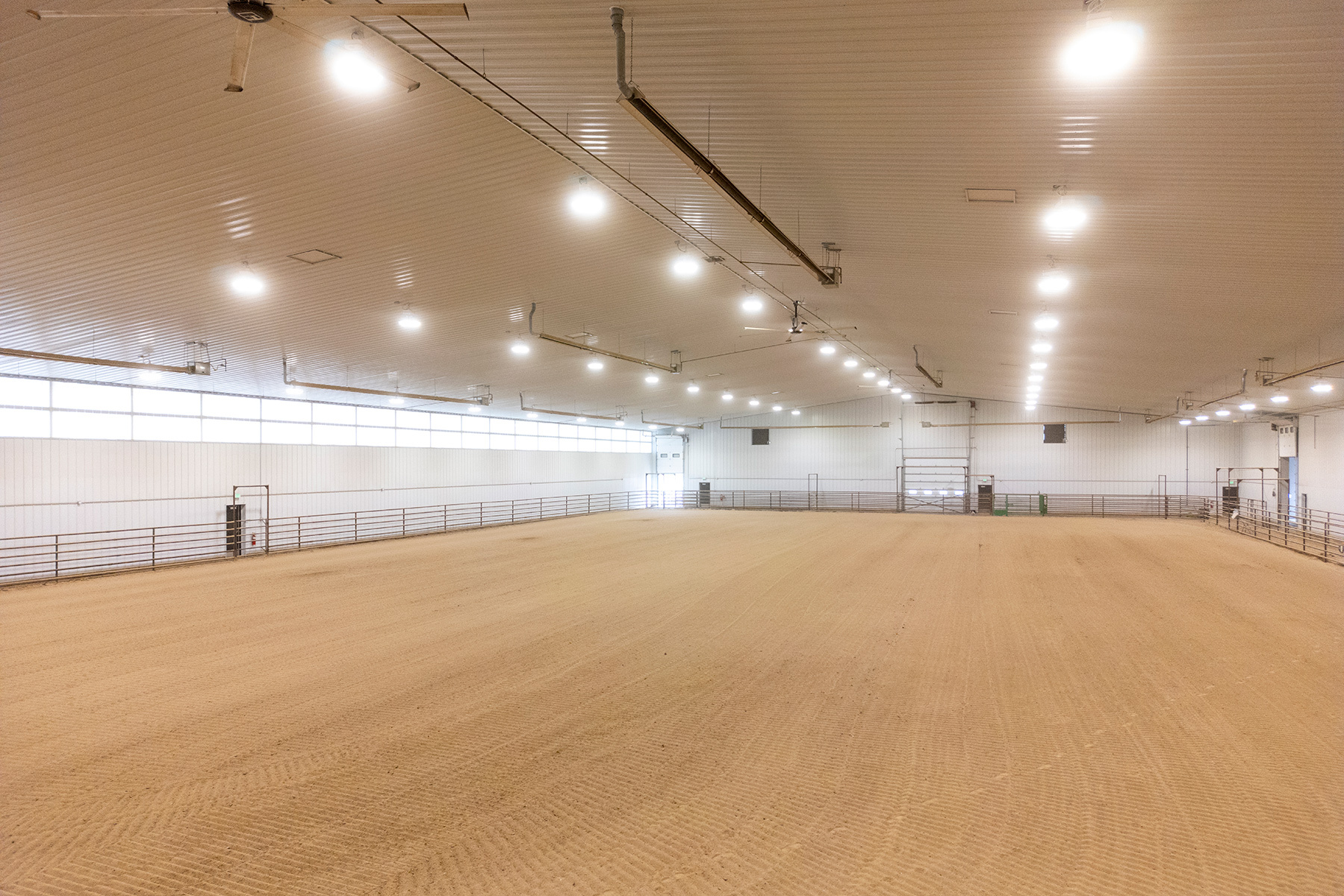
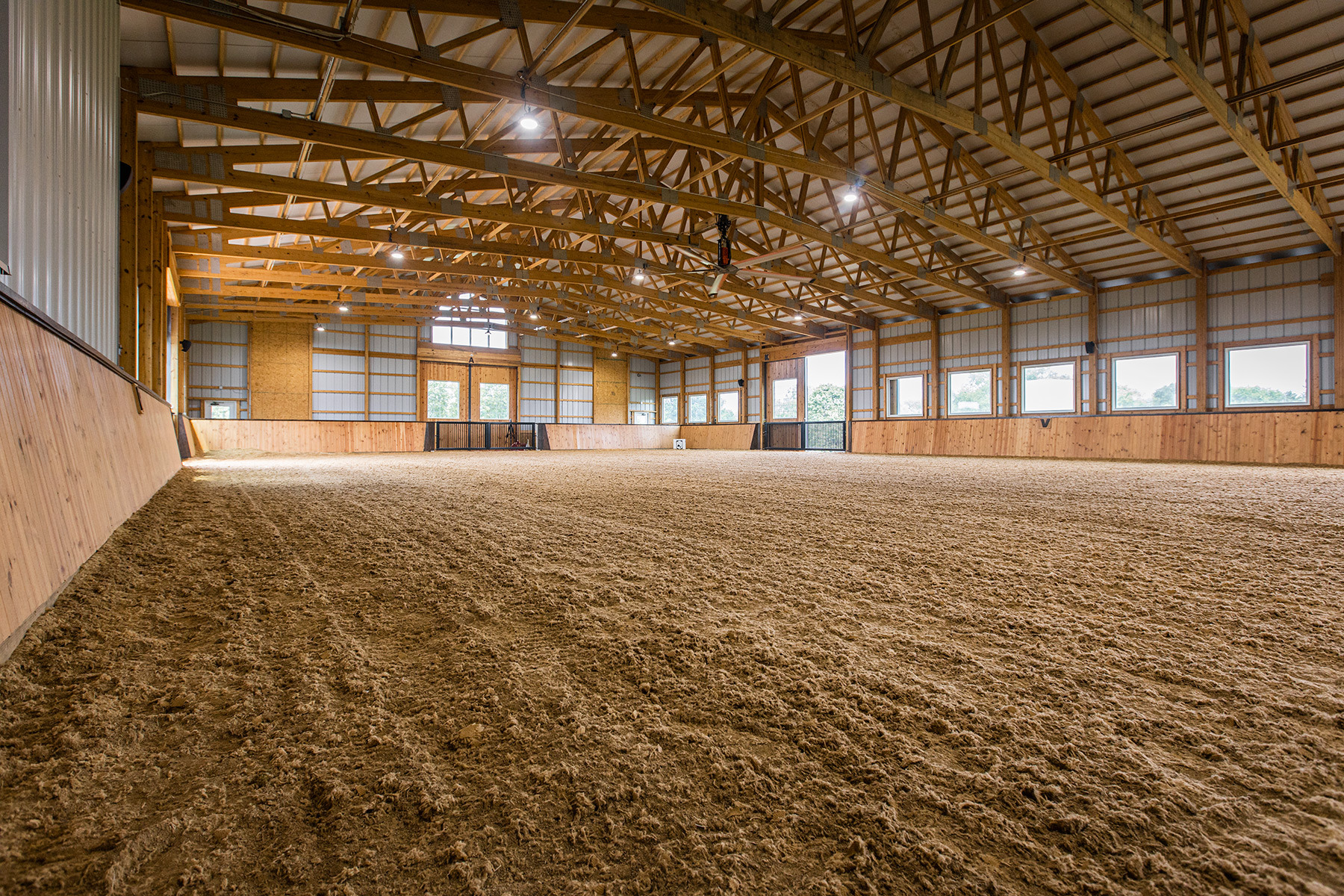
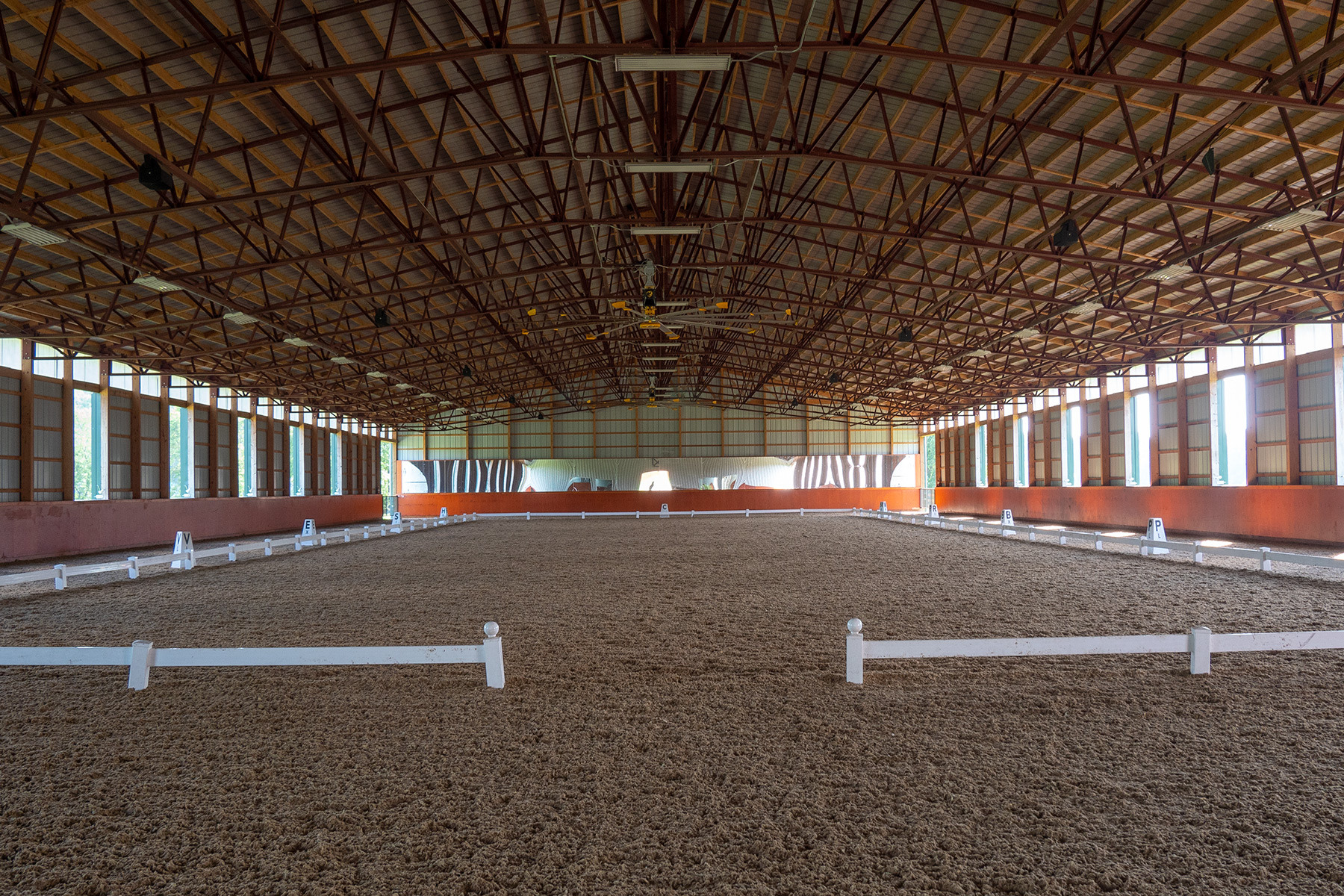
Ample lighting is paramount in an indoor riding arena. Dark, dimly lit arenas can hinder the horse’s and rider’s abilities to judge both depth and distance. Shadows may also lead to spooking or other unwanted behaviors.
- Natural Lighting – Roof skylights with a vapor barrier can be utilized at various positions on the roof surface. If roof skylights are not desired, a continuous sidewall sky belt just under the eave line can be utilized on one or both sides of the arena.
- Artificial Lighting – Most arenas will have LED lighting. Always be mindful of lighting configurations around ceiling fans to avoid unwanted shadows.
Lighting
Footing Material
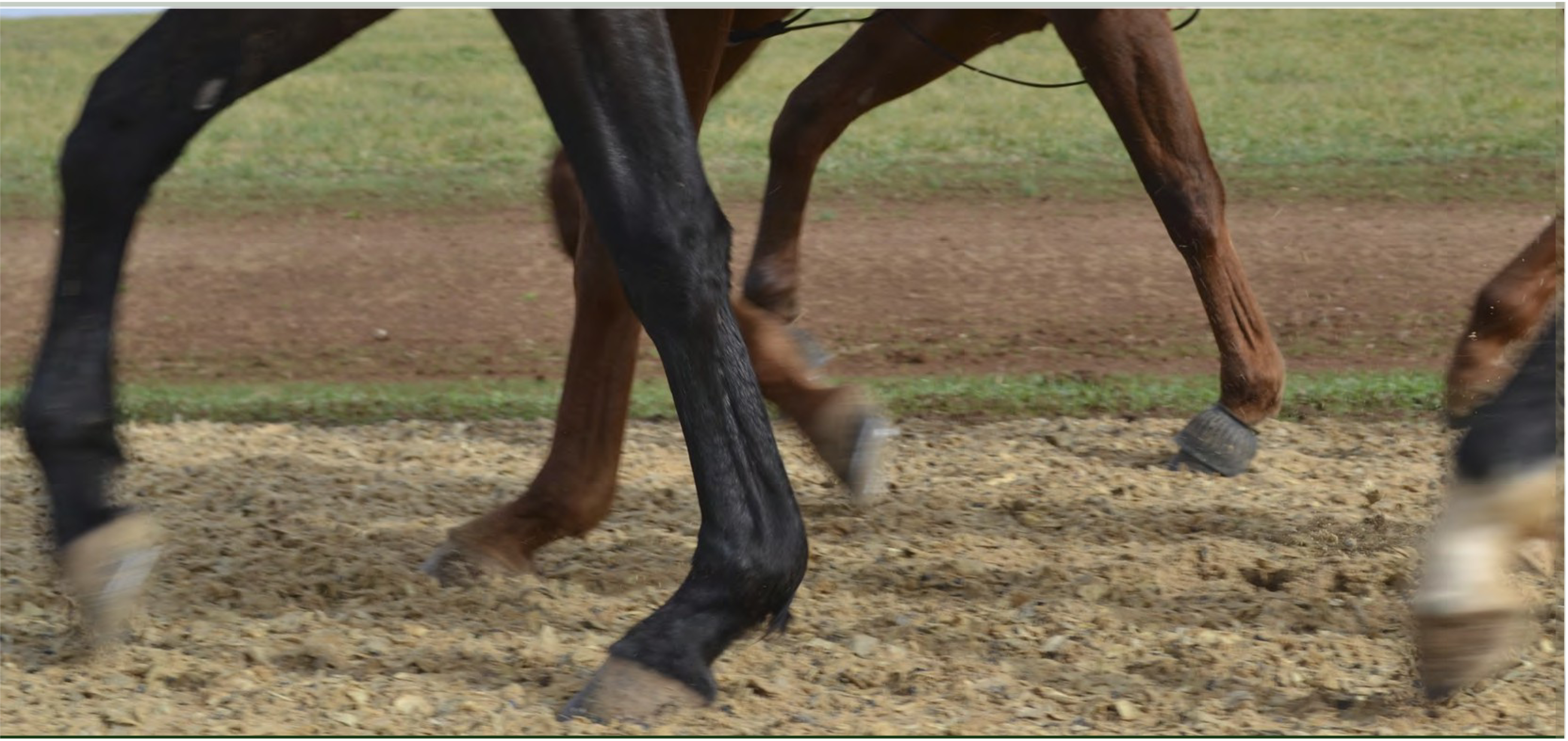
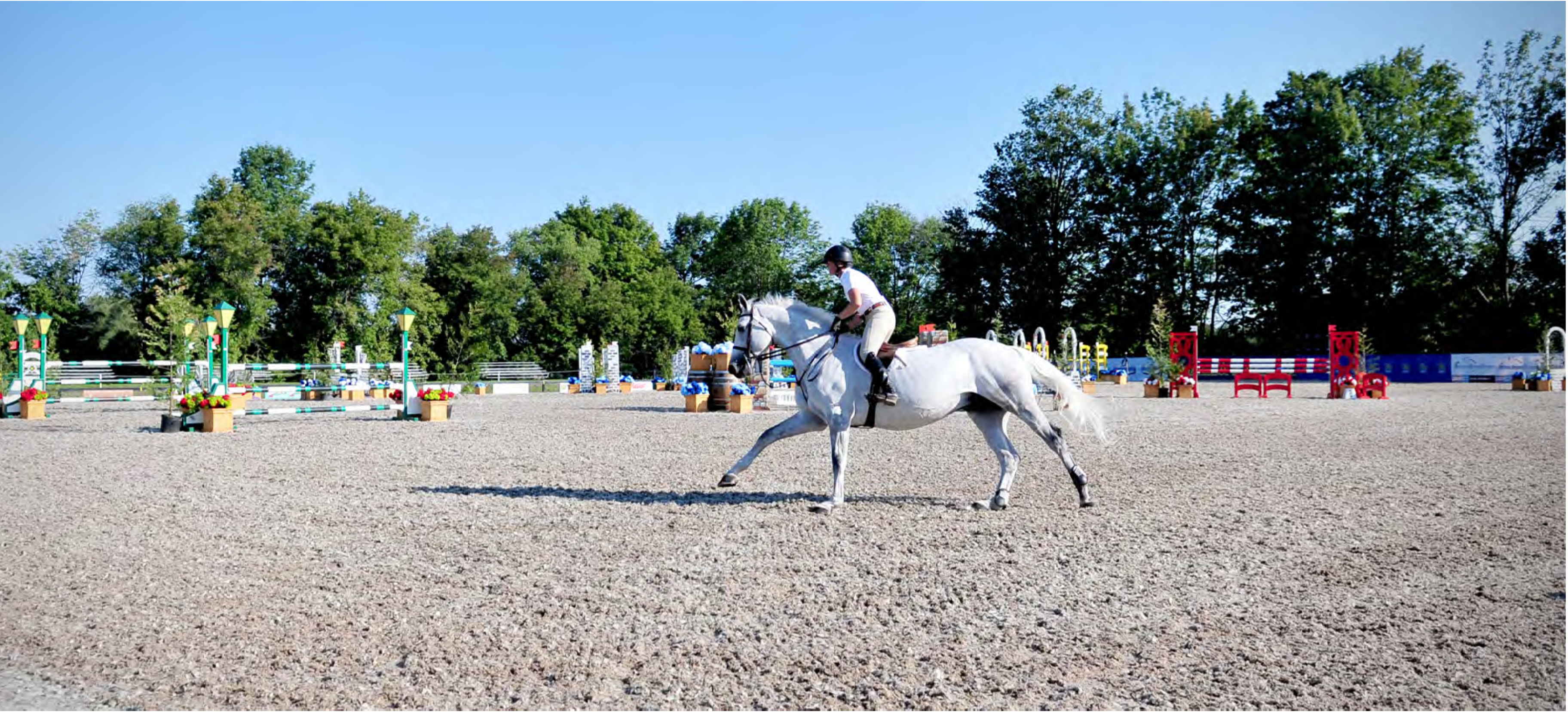
When selecting footing material for an indoor riding arena, it's important to prioritize safety, performance, and durability. The footing should offer reliable traction and shock absorption to protect both horse and rider while also being easy to maintain and suited to the specific riding discipline. Dust control is also a key factor — either a watering system must be installed or a dust‑free footing material should be used to maintain air quality.
Other Elements to Consider
- What are the local building codes and zoning requirements your project must meet?
- What are your long‑term plans or future expansion areas?
- Will the arena be attached or detached from your stall barn?
- Do you plan to have bleacher seating or a viewing lounge?
- Do you have additional storage needs in the building, such as storage for equipment, hay, feed and bedding, or a horse trailer?
Whether you enjoy horses for recreation, sport, or companionship, there are many options to consider when building a new riding arena. Starting with a well‑thought‑out plan will help produce a facility that you can be proud of and enjoy for years to come.
From the initial design to the completion, our team at Morton is here to help guide you through the entire process. Contact your local Morton sales consultant today.